Will AI Replace Your Web Developer? (No. Here’s Why.)
AI is writing more code than ever. App stores are flooded with AI-built software. Tech leaders are making bold predictions. So should you fire your developer and let ChatGPT build your website? Here’s the honest answer from someone who uses AI every single day.
What AI Can Actually Do Right Now (Let’s Be Honest)
I use AI to build websites every day. Claude, Cursor, ChatGPT. They’re all part of my workflow, and they genuinely make me faster.
AI can generate boilerplate code in seconds. It can suggest layouts, write first-draft copy, debug simple errors, and scaffold entire components that would have taken me an hour to write from scratch. Tasks that used to take four hours now take one. That’s real.
Andrej Karpathy, co-founder of OpenAI and former AI lead at Tesla, coined the term that captures this moment perfectly:
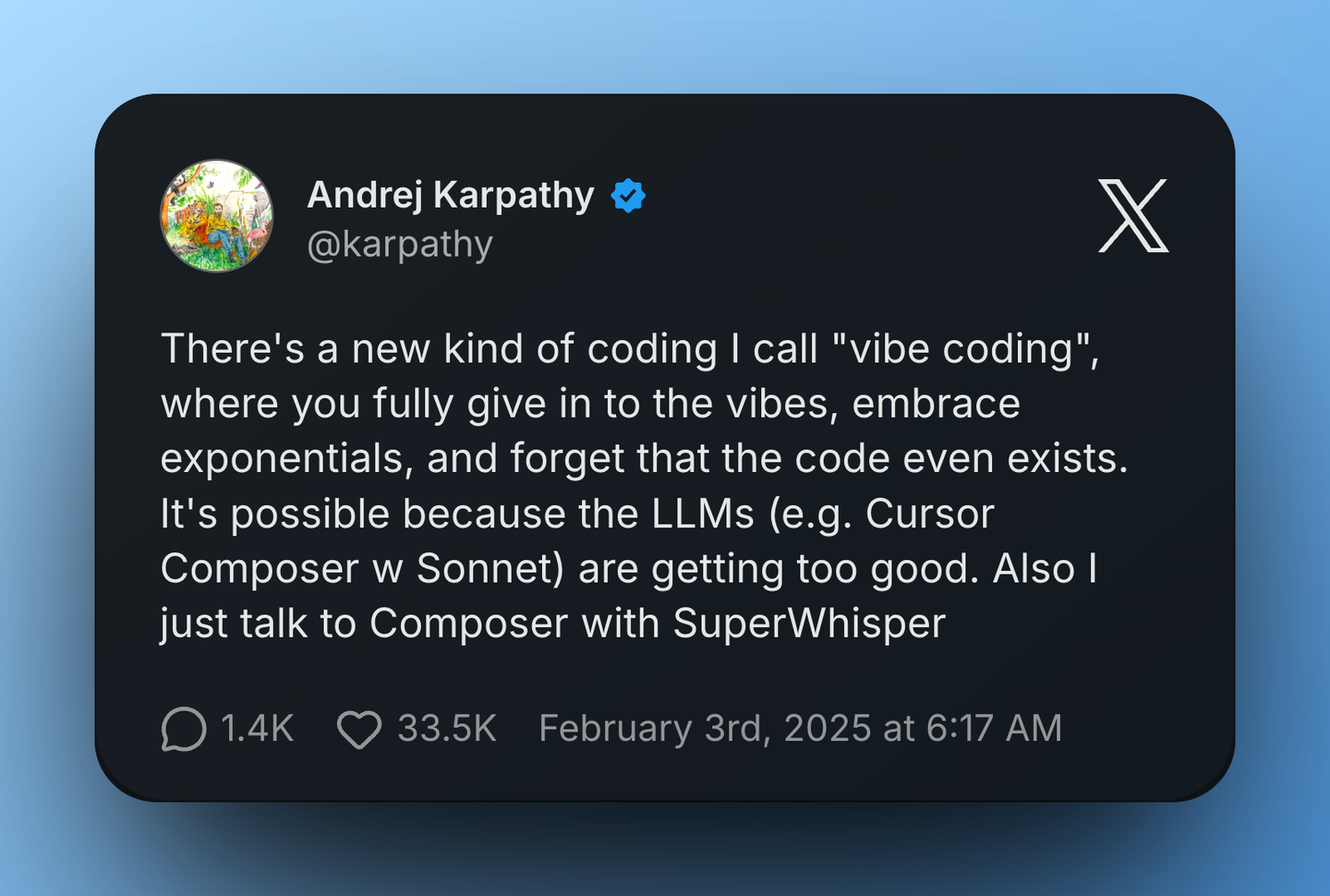
“Vibe coding” became Collins Dictionary’s Word of the Year for 2025. The tools enabling it (Cursor at $2B revenue, Lovable at $200M with 50x growth in one year, Bolt.new, Replit) are among the fastest-growing companies in tech history.
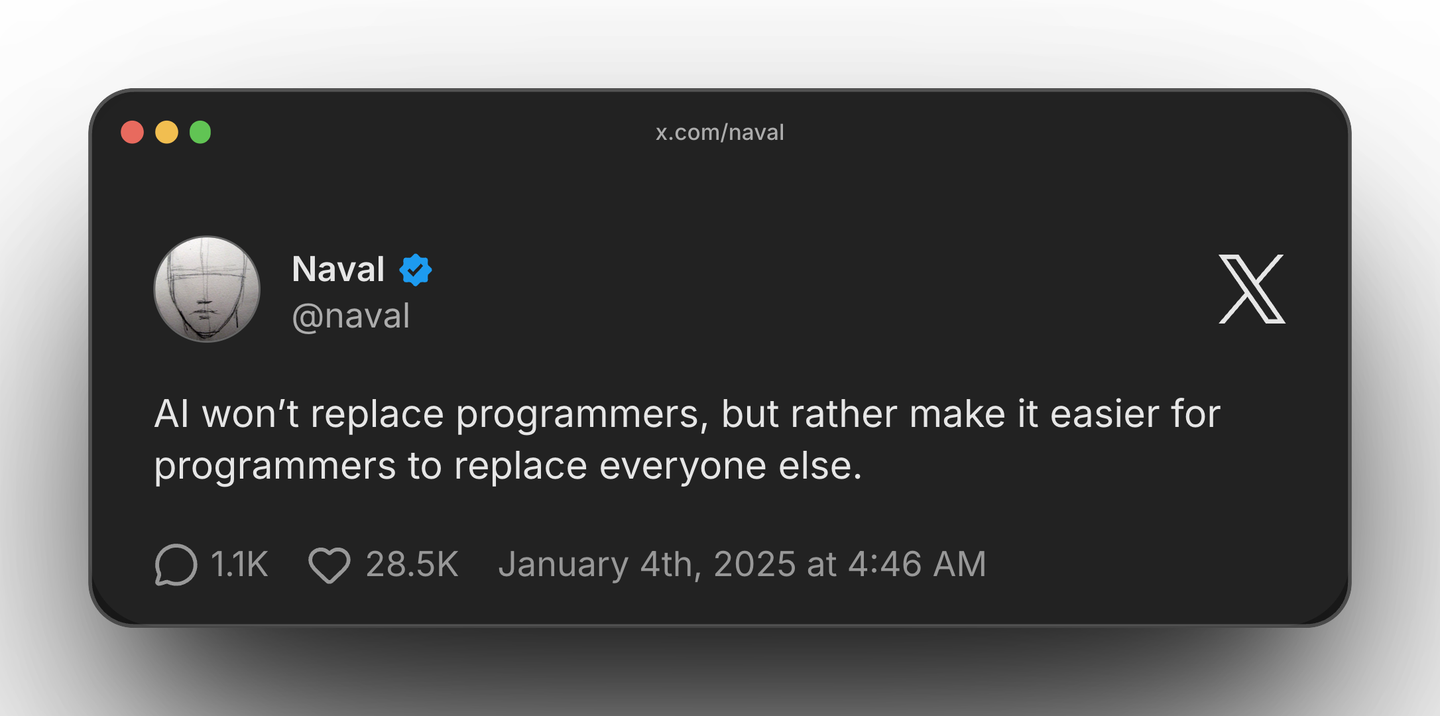
So yes. AI is writing code. A lot of it. The question is: does that mean you don’t need a developer?
What AI Still Cannot Do (And May Never Do Well)
Here’s what I’ve learned from using AI tools daily for two years: they’re incredible at the what and terrible at the why.
AI doesn’t know your customers. It doesn’t understand why your checkout flow needs to work a certain way for your specific audience, or why your booking form should ask for a phone number instead of an email, or why your homepage needs to load in under two seconds because your customers are tradespeople checking it on a phone between jobs.
AI can’t diagnose why your site went down at 2am. It can’t chase a plugin conflict across three interacting systems. It can’t call your hosting provider. It can’t decide whether a $50 plugin or a custom-built solution is the right call for your budget and your business goals.
Marc Andreessen put it plainly on the Lenny’s Podcast in January 2026:
“If you don’t understand how to write code yourself, you can’t evaluate what the AI gives you. You still need deep fundamentals, because without them, you won’t know when the AI is wrong.”
Marc Andreessen, a16z founder, Lenny’s Podcast, Jan 2026
The shift happening right now isn’t from “human writes code” to “AI writes code.” It’s from writing code to discernment: knowing what to build, why to build it, and whether what the AI gave you is actually good. That’s arguably more important than the typing ever was.
The Proof Is Already In. Look at the App Store.
We don’t have to speculate about what happens when non-developers build software with AI. The experiment has already run. The results are in. And they’re not pretty.
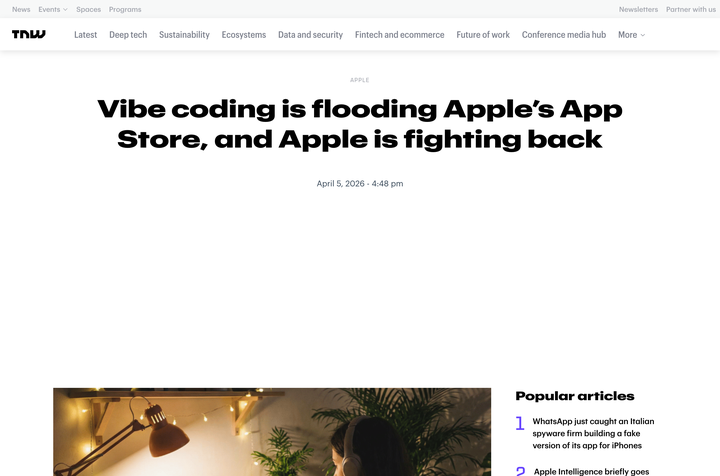
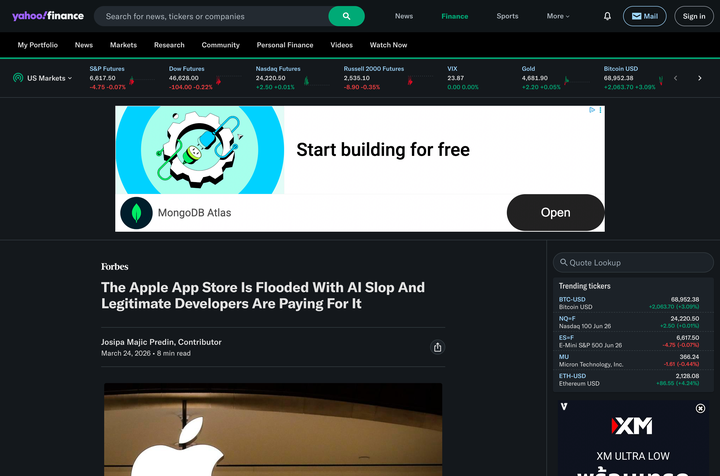
557,000 new apps were submitted to the Apple App Store in 2025. A 24% jump and the largest wave since 2016 (Appfigures).
The numbers tell the story:
- App submissions surged 84% in a single quarter as vibe coding went mainstream (The Information)
- 45% of AI-generated code fails security tests with critical OWASP Top 10 vulnerabilities (Veracode 2025)
- AI-powered apps see subscribers cancel 30% faster than non-AI apps (RevenueCat 2026)
- The top 1% of apps earn 92.2% of all revenue. The other 557,000 are fighting over scraps
- Close to 25% of all App Store apps have under 100 downloads
- AI pull requests contain 1.7x more issues than human PRs, with readability problems 3x higher and performance issues 8x more common (CodeRabbit)
- An estimated $1.5 trillion in technical debt is predicted by 2027 from poorly structured AI code
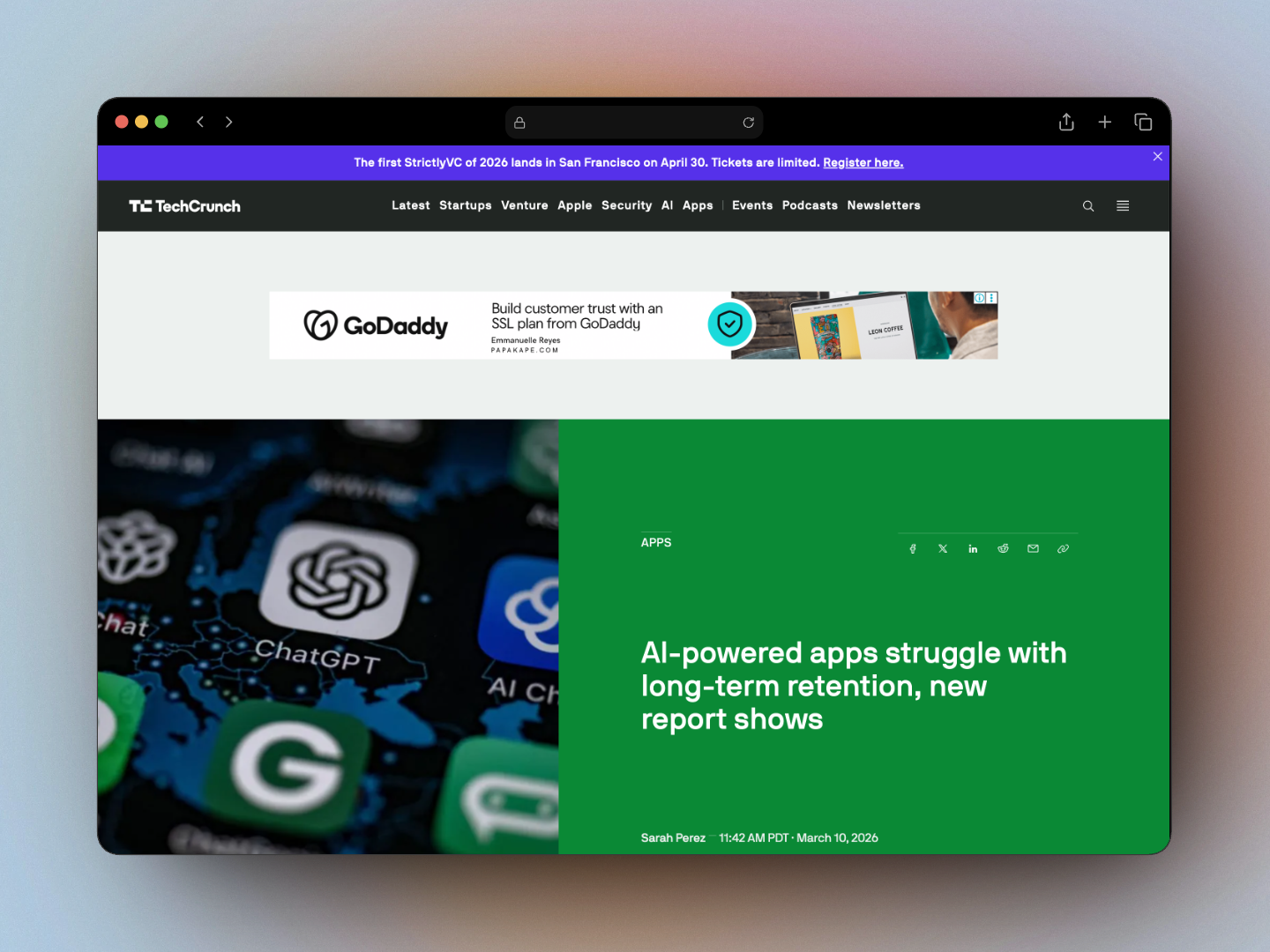
Apple’s response? They started actively blocking and removing vibe-coded apps. Review times ballooned from 24-48 hours to 7-30+ days. They pulled the app “Anything” entirely. Replit and Vibecode had updates blocked. The platform that was built to distribute software is now struggling to evaluate the volume of software being generated.
The Real Risk Isn’t AI. It’s Hiring Someone Who Only Uses AI.
There’s a running joke in the developer community about this. It goes something like this:
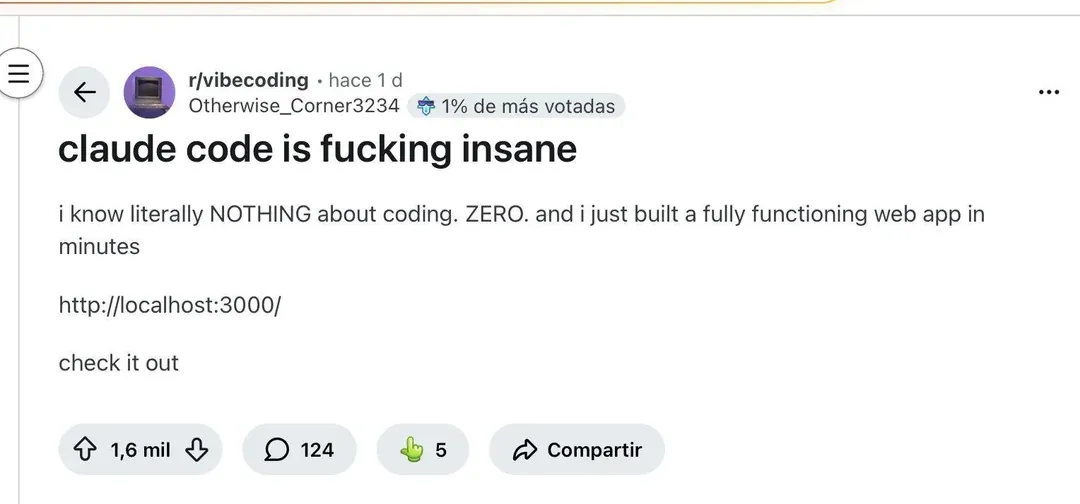
It works on their machine. That’s it. They’ve never deployed it. Never handled real users. Never dealt with authentication, rate limiting, or what happens when 500 people hit it at once. The gap between “I built something” and “I shipped something that works in production” is exactly where a real developer earns their keep.
AI is bringing a lot of people into development work who genuinely don’t understand what they’re building. And you can tell. Here’s what a typical AI-generated website looks like:
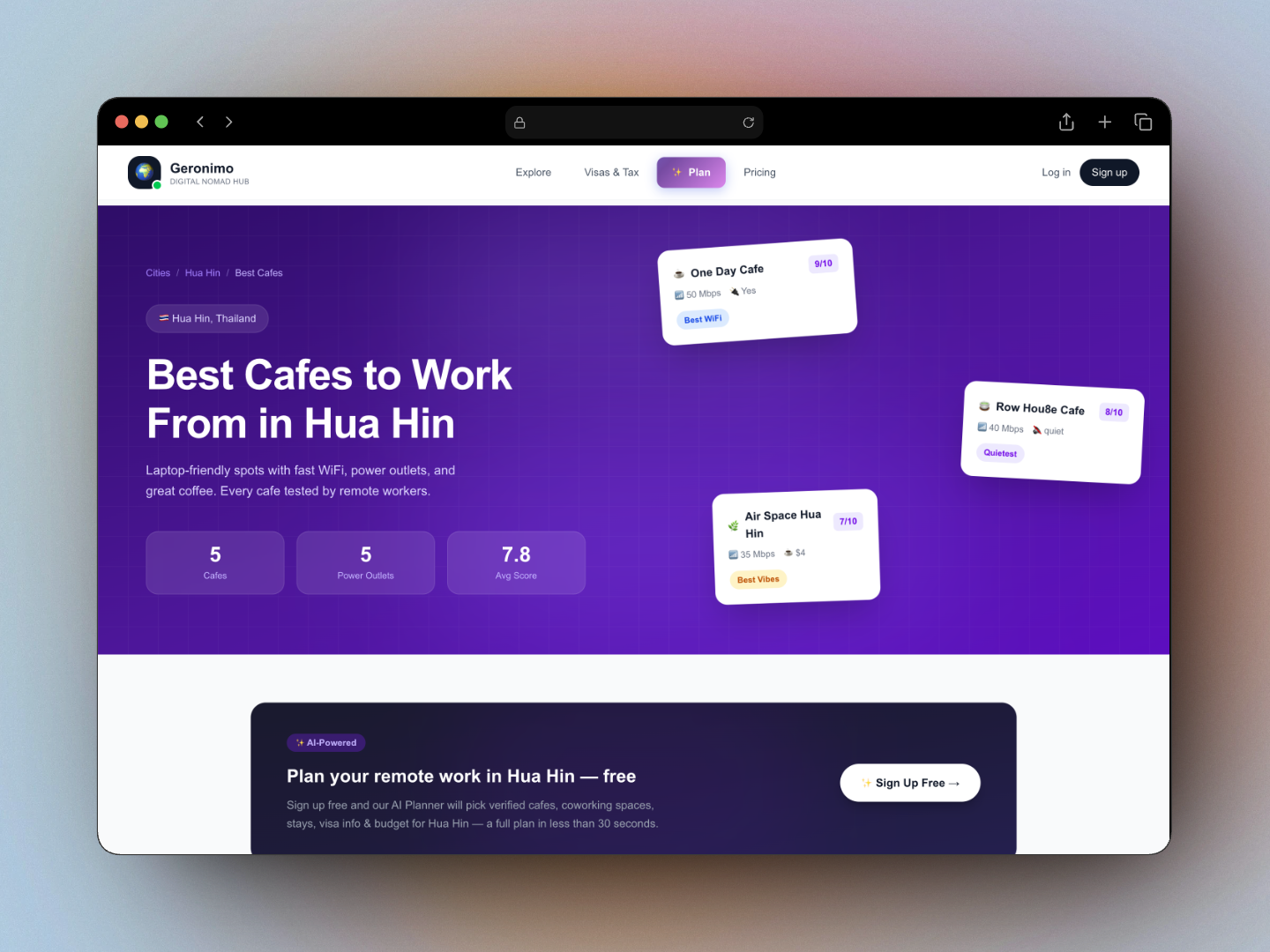
It “works” in the sense that it loads. But there’s no brand identity. No thought behind the layout. No understanding of who the customer is or what they need to see first. The copy is generic enough to describe cafes, gyms, or dog parks. It’s the web equivalent of a suit that technically fits but was clearly bought without trying it on.
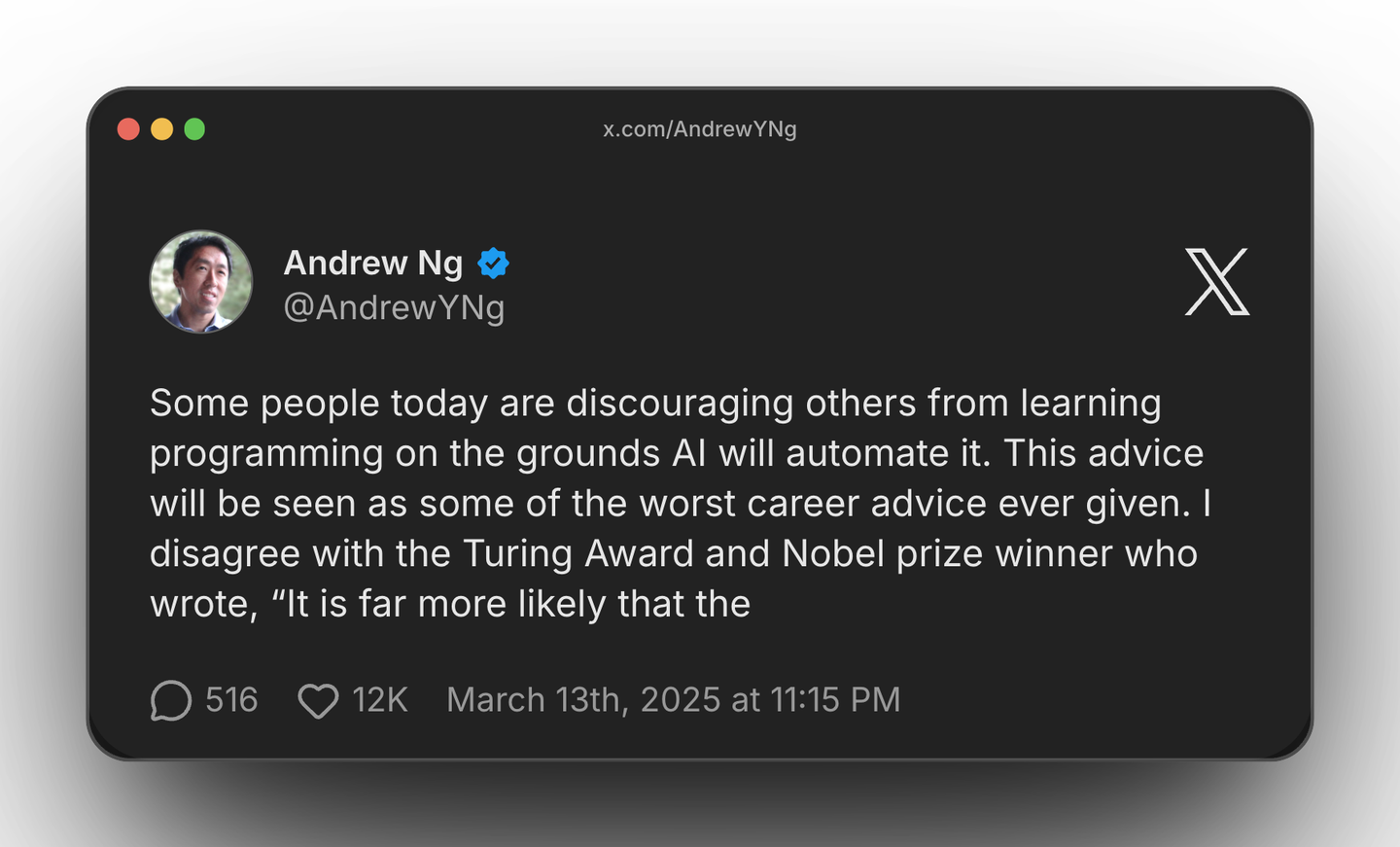
Andrew Ng, the Stanford AI researcher and Coursera co-founder, has been blunt about this dynamic:
The point isn’t that AI tools are bad. They’re genuinely powerful. The point is that a powerful tool in unskilled hands produces powerful garbage. A chainsaw doesn’t make you a carpenter.
Where AI Actually Helps Your Business (Even If You’re Not a Developer)
Here’s the part most “AI vs developers” articles skip: AI is incredibly useful for business owners, just not in the way you might think.
Validate ideas faster. Before spending $10K on a build, use AI to prototype and test assumptions. Does the concept even work? Will users respond? You can answer these questions in a weekend now.
Hire smarter. Use AI to evaluate proposals, understand technical decisions, and ask better questions when interviewing developers. “Why did you choose this approach?” is a much better question when you’ve already had Claude explain the alternatives.
Create exceptional project briefs. PRDs (product requirement documents) that used to take weeks of back-and-forth can be drafted in hours with AI assistance. Your developer will thank you for the clarity.
Check your developer’s decisions. AI can help non-technical people understand code choices, spot potential red flags, and ask the right questions. Think of it as having a knowledgeable friend look over the estimate before you sign.
But (and this is the important part) none of this replaces the actual developer. It makes the relationship better. You’re a more informed client. They’re a more productive builder. Everyone wins.
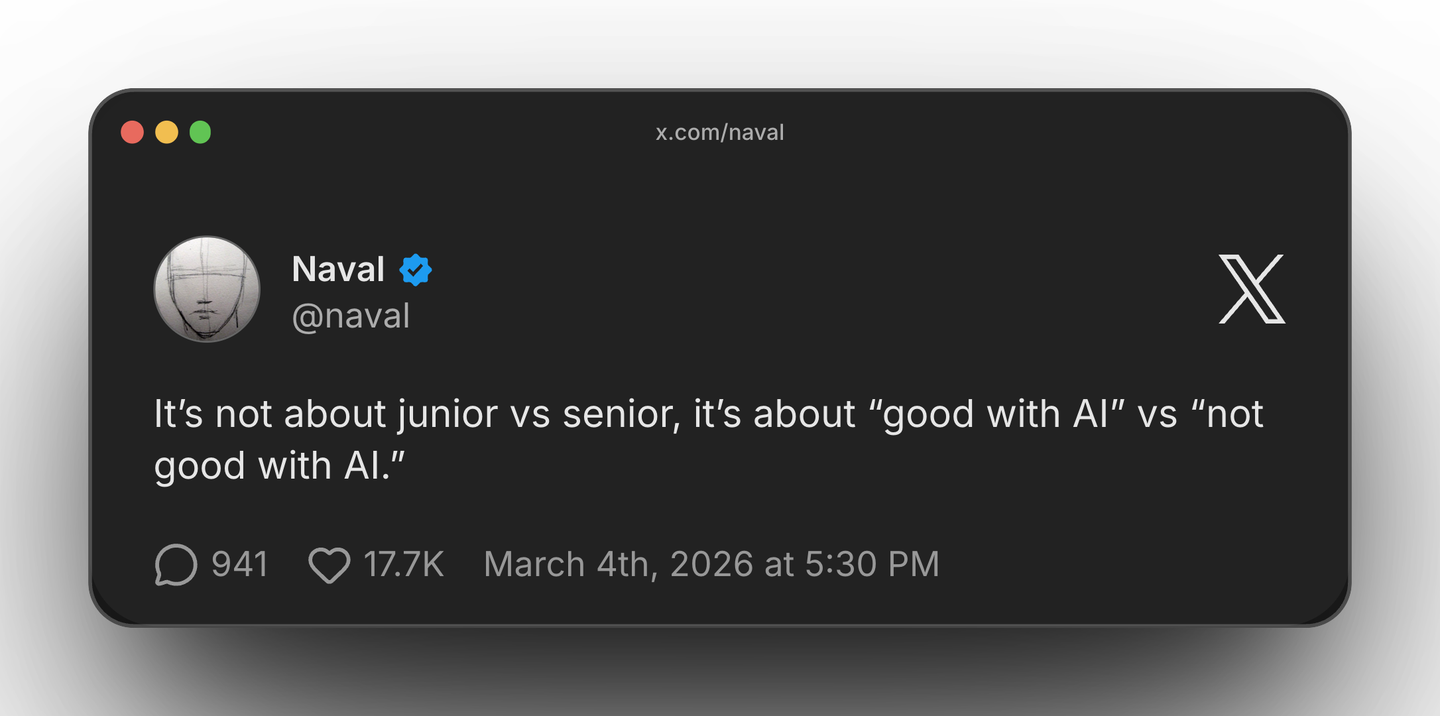
“AI won’t replace humans. But humans who use AI will replace humans without AI.”
Karim Lakhani, Harvard Business School (widely misattributed to Sam Altman)
If You ARE Using AI to Build Something, Do It Right
Maybe you’re prototyping an idea. Maybe you’re building an internal tool. Maybe you just want to see what’s possible. That’s great. But if you’re using AI to write code, there are some things you should insist on from the start. Tell the AI explicitly:
- Use version control from day one. Tell the LLM to initialise a Git repository. If something breaks (and it will), you need to be able to roll back. If the AI can’t set up Git, that’s already a red flag about the complexity of what you’re building.
- Assume the app will be public. Remind the AI to implement normal security practices: authentication, input validation, HTTPS, environment variables for secrets. Never hardcode API keys. “It’s just a prototype” is how production security holes are born.
- Follow real coding standards. For PHP, be PSR-compliant. For Python, follow PEP 8. For JavaScript/TypeScript, use ESLint. Tell the AI explicitly. It will comply, and the code will be dramatically better for it.
- Use all-in-one platforms. Vercel + Supabase, or similar. Don’t get blindsided by authentication, database management, and hosting considerations six months in. These platforms handle the infrastructure so the AI (and you) can focus on the product.
- Continuously audit. Regularly ask the AI: “audit this code for security vulnerabilities and code quality.” And: “what is normally done here? What do major companies do in this circumstance?” This keeps the output grounded in real-world practice instead of AI improvisation.
- Know when to bring in a professional. Prototyping is one thing. Going to production with real users, real data, and real money is another. The handoff point is usually earlier than you think.
The Bottom Line: You Need a Human Who Knows How to Use the Tools
One year after coining “vibe coding,” Karpathy revisited the concept. His conclusion? The approach evolved into something he calls “agentic engineering”:
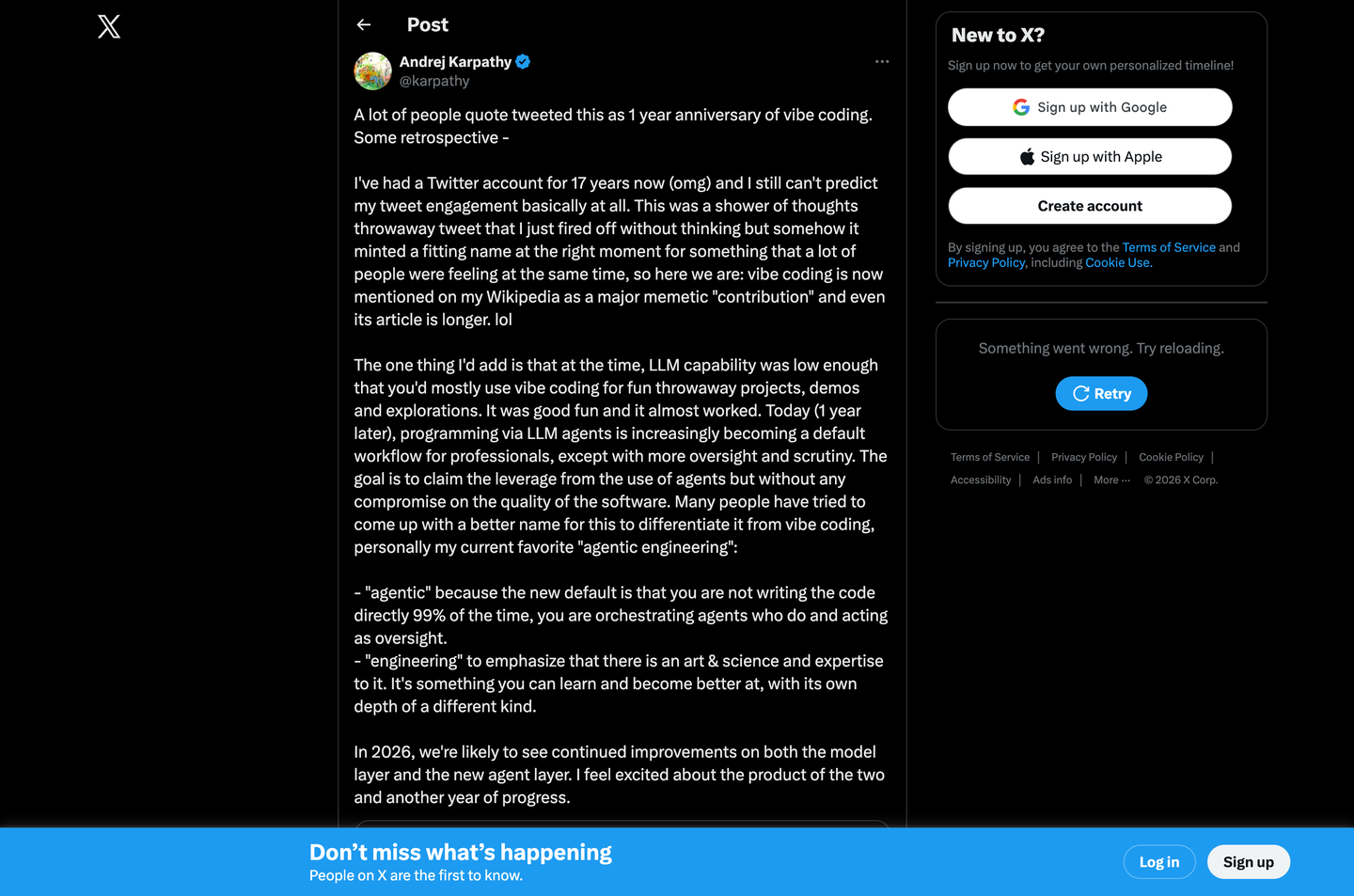
“The new default is that you are not writing the code directly 99% of the time. You are orchestrating agents who do, and acting as oversight. Engineering, to emphasise that there is an art and science and expertise to it.”
Andrej Karpathy, February 2026
Even the person who started the “vibe coding” movement now says it requires engineering judgment, expertise, and oversight. The code writes itself. The thinking doesn’t.
Satya Nadella, CEO of Microsoft, calls AI a “cognitive amplifier” and “scaffolding for human potential.” Not a replacement for it.
Some people (Elon Musk, Jensen Huang) argue that coding itself will become obsolete. Easy to say when you’re not the one whose business goes down because an AI-generated app had a security hole that nobody with experience ever reviewed.
The reality, in my experience building WordPress sites every day with AI assistance: AI makes a good developer great. It does not make a non-developer good. The businesses that will thrive are the ones that pair AI tools with human judgment, not the ones that replace one with the other.